Software Development Services in Jaipur: How to Choose the Right Solution for Your Business
Archit Bhatt
Author & Tech Team
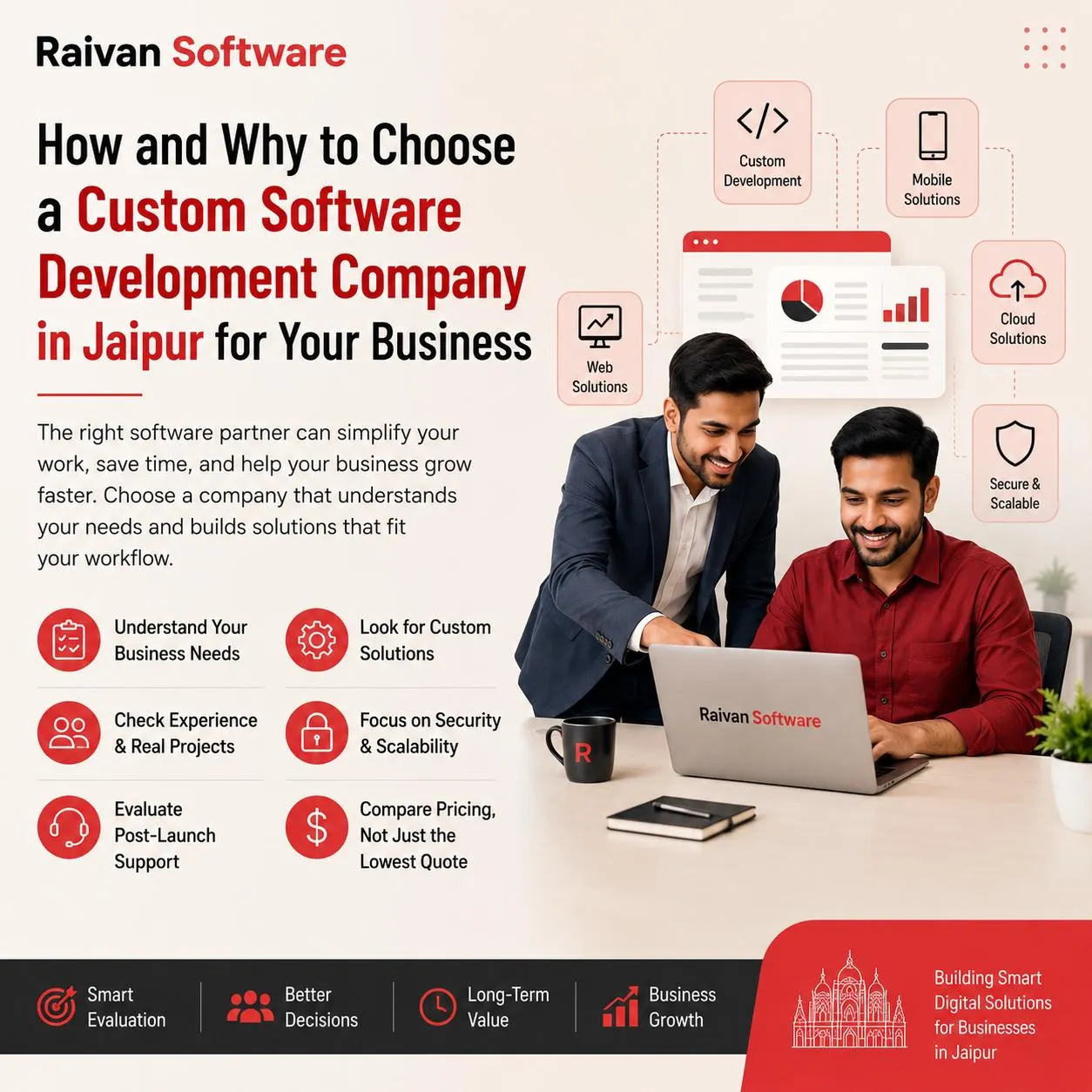
Software Development Services in Jaipur
If you’re running a business here in Jaipur, picking professional Software Development services in Jaipur isn't just about hiring someone who can write clean code. The real test comes down to something much more practical: is this software actually going to solve the day-to-day headaches your staff deals with, or will it just sit there as another useless dashboard?
Look at how most local businesses operate initially. You start off tracking stock on Excel, taking orders on WhatsApp, printing invoices through Tally, and keeping client contact details on phone notes or a basic CRM. In the beginning, when order volume is low, this makeshift arrangement works fine. But as sales pick up, your team expands, and you open a second branch or warehouse, this scattered setup starts falling apart.
Before you know it, employees are wasting hours copy-pasting customer information across three different portals. Leads get buried, invoices get delayed, and pulling together a single month-end sales report turns into a whole day's effort. That exact moment of friction is usually when business owners realize they’ve outgrown makeshift tools and need proper software.
When Does Ready-Made SaaS Stop Making Sense?
The thing about business operations is that every industry has its own unspoken quirks.
Take a textile distributor in VKI or a jewelry wholesaler around Johari Bazar—they need real-time synchronization between warehouse inventory, billing software, and customer credit thresholds. On the other hand, a service business struggles with missing lead follow-ups and keeping track of field staff visits.
Standard, off-the-shelf software is completely fine if your requirements are totally generic. But problems start the moment your actual business process collides with the software’s rigid limitations. When software forces your employees to alter their proven workflow just to fit into how an app works, efficiency takes a nosebleed.
Think about it this way: if your sales rep has to fill in client info on a CRM and then re-type that exact same data into a separate accounting app for billing, you’re basically paying salaries for redundant manual labor. Good software bridges these disconnected gaps, eliminates duplicate data entry, and gives your team their valuable time back.
What You Should Look For Before Signing a Development Deal
This is where a lot of business owners make hasty mistakes.
Whatever you do, don't hire an agency simply because they showed you a glossy, colorful slide deck or pitched the absolute lowest price in town. Before you even ask for a quotation, lay out your actual operational bottlenecks and pay close attention to how their team responds.
An experienced, mature development partner won't jump straight into throwing complicated tech jargon or pre-packaged pricing plans at you. Instead, they’ll want to get into the weeds of your daily work:
They'll ask where your employees lose maximum time during peak hours, what manual errors trigger customer complaints, which existing systems need to exchange data via APIs, and what your expansion plans look like for the next couple of years.
More than technical knowledge, evaluate their communication style. If an agency can't explain their proposed solution in clear, straightforward business language without hiding behind buzzwords, working with them over a 4-month build is going to be painful.
Off-the-Shelf SaaS vs. Custom Software: Making the Call
Let's be completely transparent here—custom software isn't always the right move.
If an existing, ready-made tool handles 85% to 90% of what you need without causing major operational hiccups, stick with it. Preserve your capital. However, investing in custom software development becomes a no-brainer when:
- Your daily workflow has unique business logic that no ready-made app caters to.
- You need strict, multi-level user access permissions, specialized approval chains, or custom-designed reporting views.
- You are running multiple disconnected tools that desperately need custom API integrations to share data automatically.
A reliable software agency won't try to sell you a custom platform if a simple subscription tool fits your needs. Their focus will always be on evaluating the business problem first and choosing the tech stack second.
Don't Sleep on Data Security and Future Scalability
One of the biggest mistakes we see companies make is building software strictly for the headcount they have today.
You might have 12 people on staff right now, but what happens when that number grows to 50 or 80? What if you expand into two more cities or launch a direct customer portal down the line?
These future possibilities need to be discussed upfront before the first database schema is drawn up. System architecture, user role hierarchies, automated cloud backups, data encryption, and server load balancing ultimately dictate whether your system will handle growth smoothly or choke when user traffic spikes.
Real Work Begins After the Code Goes Live
Deploying your application to a live server isn't the finish line—it’s actually where real-world stress testing starts.
The moment your staff begins using the platform daily, edge cases will pop up, minor workflow adjustments will be needed, and small bugs will inevitably surface. This is why post-launch maintenance terms shouldn't be an afterthought; they need to be finalized in the main agreement.
Get explicit, written answers to these practical questions before signing:
- What bug-fix support is included post-launch, and for how many months?
- What is the exact process and SLA (Service Level Agreement) for critical system crashes?
- How are future feature enhancements or major updates billed once the main project is closed?
Having clarity on these points early on saves you from endless arguments and unexpected costs later.
The Bottom Line
Building great software isn't about cramming as many fancy features as possible into one dashboard. It’s about building a dependable, intuitive system that removes the specific operational friction slowing your company down.
Before picking a software development partner in Jaipur, take a step back and map out exactly where your business is losing time and money. Evaluate development agencies on their business understanding, practical experience, transparent communication, and post-launch support-not just the initial estimate.
Partner with a team that takes the time to listen, asks the right questions, and builds technology that actually makes running your day-to-day business easier.
Frequently Asked Questions (FAQs)
1. What do software development services in Jaipur actually cover?
It spans the complete product lifecycle—from initial process mapping and UI/UX wireframing to custom web/mobile coding, database setup, API integrations, testing, server deployment, and long-term technical maintenance.
2. How do I evaluate if a
software development company is right for me?
Look past their website design. See if they ask meaningful questions about your business workflow rather than just pitching technical frameworks. Check their past project delivery track record, QA testing standards, and post-launch support policies.
3. When should a business pick custom software over off-the-shelf apps?
Custom software makes sense when off-the-shelf tools force your staff into slow manual workarounds, your operations require custom approval workflows, or you need seamless integrations between different internal platforms.
4. How much does custom software development cost in Jaipur?
Custom software development in Jaipur has no fixed cost; it depends on features, technology, integrations, security, and project complexity.